Future Literacy Group behind MWC 2026’s global gravity node on next-gen quantum infrastructure
At Mobile World Congress 2026, conversations around quantum technologies moved beyond security narratives and into the domain of next-generation infrastructure.
Future Literacy Group contributed to shaping this shift by supporting discussions focused on how quantum networking -and specifically quantum entanglement– may redefine the capabilities of telecom infrastructure in the coming decade.
While quantum has often been framed primarily through the lens of cybersecurity risks and QKD deployments, emerging architectures point to a broader role: quantum networks as foundational infrastructure enabling distributed sensing, trusted coordination, and new forms of large-scale computation.
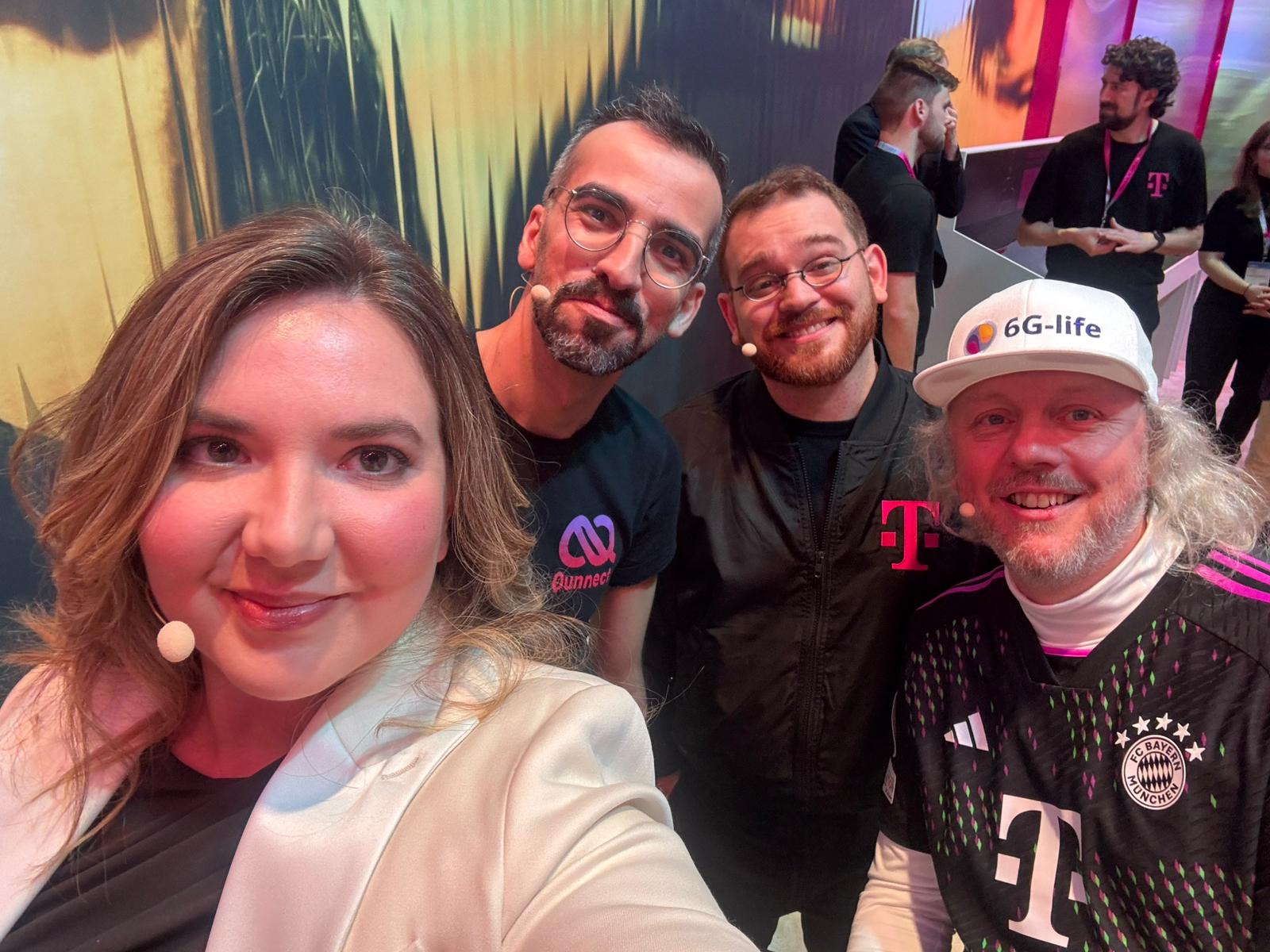
This perspective was reflected in the session “From Fiber to Quantum: The Next Generation of Network Capabilities”, hosted by Deutsche Telekom, and moderated by María Luque Fernández, CEO of Future Literacy Group.
The panel brought together: Matheus Sena (T-Labs / Deutsche Telekom), Mehdi Namazi (Qunnect Inc), Frank Fitzek (TU Dresden and T Labs Chair on 6G and next-gen networking).
The discussion explored how entanglement-based networking could evolve from research demonstrations into operational telecom capabilities, including “entanglement-as-a-service” concepts enabling distributed computing, advanced sensing, and new trust architectures across networks.
These conversations build on long-standing work by Future Literacy Group in advancing the concept of a quantum internet and its policy, industrial, and ecosystem implications, including contributions to international governance discussions and early industry dialogues.
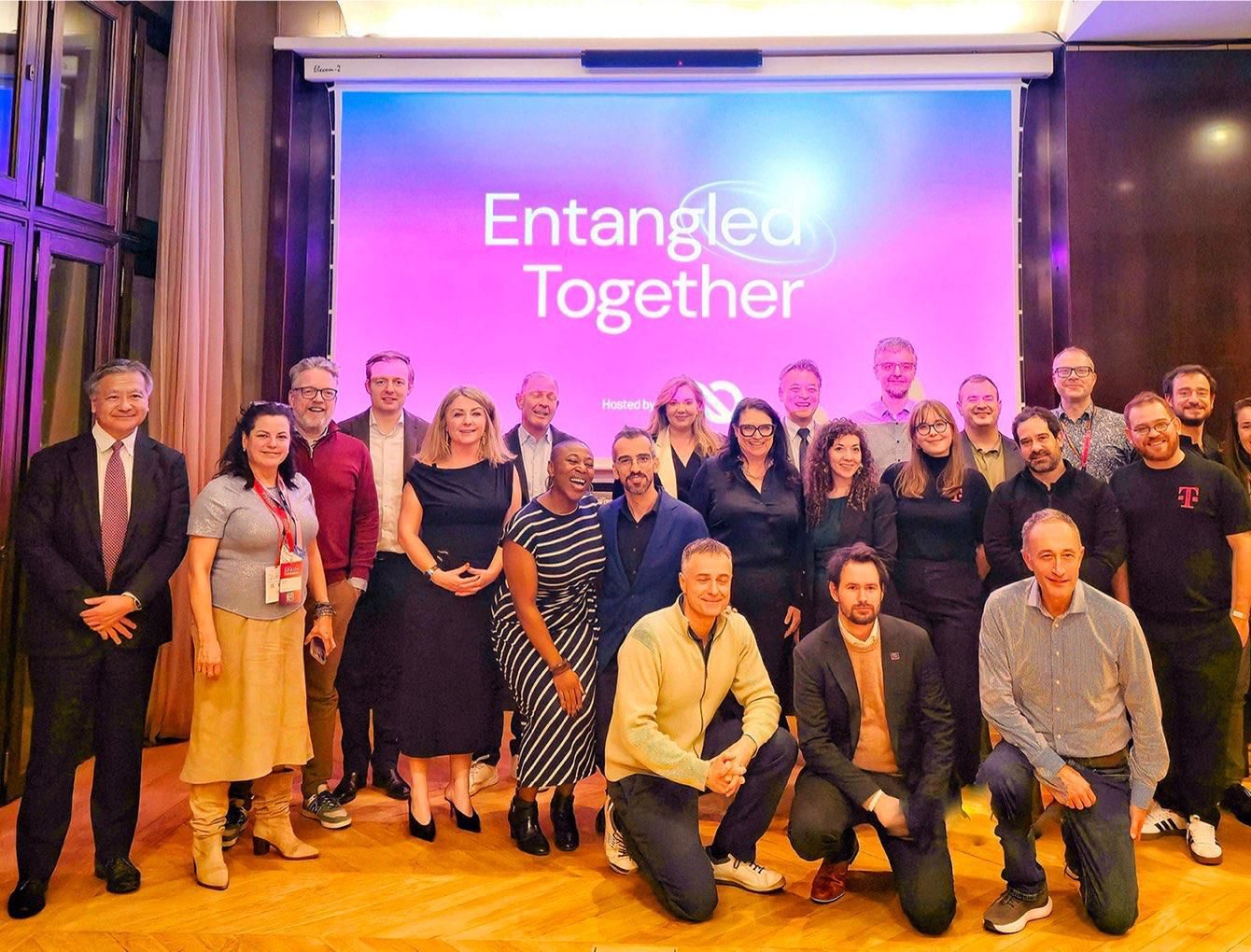
Entangled together over dinner in Barcelona
Closed-door discussion on next-generation quantum infrastructure at MWC 2026
Investors, telecom operators, quantum technology companies and ecosystem actors from Europe, the United States and Southeast Asia explored deployment pathways beyond security-focused architectures.
Beyond the public panel, Future Literacy Group also co-hosted a closed-door gathering bringing together investors, telecom operators, quantum technology companies, and ecosystem actors from Europe, the United States, and Southeast Asia. The focus was on next-generation infrastructure and deployment pathways for quantum technologies beyond current security-centric approaches.
The discussions reflected a growing convergence: telecom infrastructure, quantum technologies, and distributed computing architectures are increasingly being seen as interdependent layers of future strategic infrastructure. A demonstration of how a purposeful, trusted and strategic delivery of the importance of this subject can bring together seemingly unrelated stakeholders under MWCs agenda noise and global circumstances. To find ways forward.
MWC 2026 confirmed that quantum networking is transitioning from conceptual frameworks to real deployment conversations, and that ecosystem coordination will be critical to scaling these capabilities.
Future Literacy Group will continue supporting strategic dialogue and cross-regional collaboration around next-generation quantum infrastructure.
If you’d like to explore collaborations:
maria.luque@futureliteracy.eu
www.futureliteracy.eu/argo