Seminar: Quantum Advantage and the Future of Strategic Trust

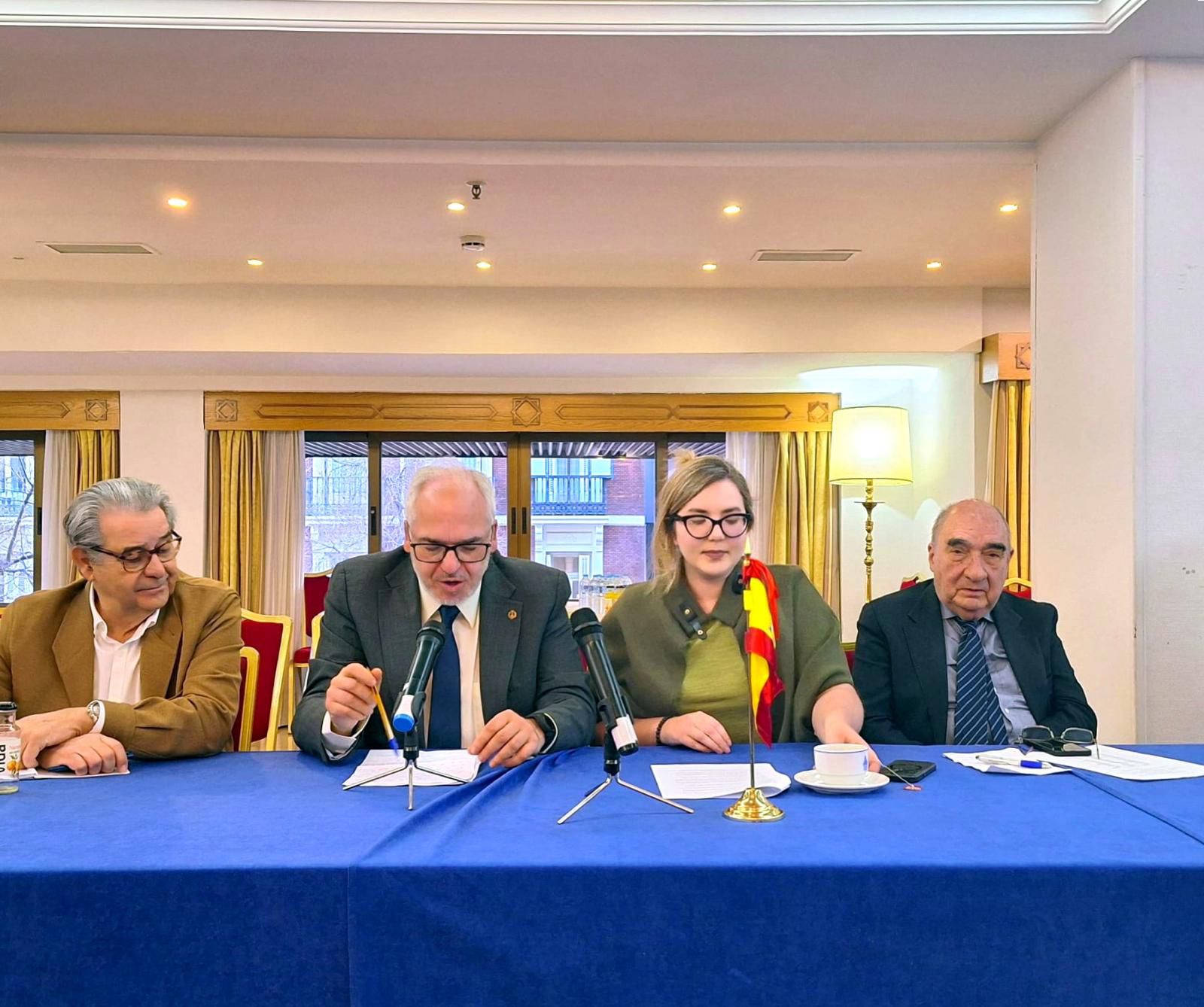
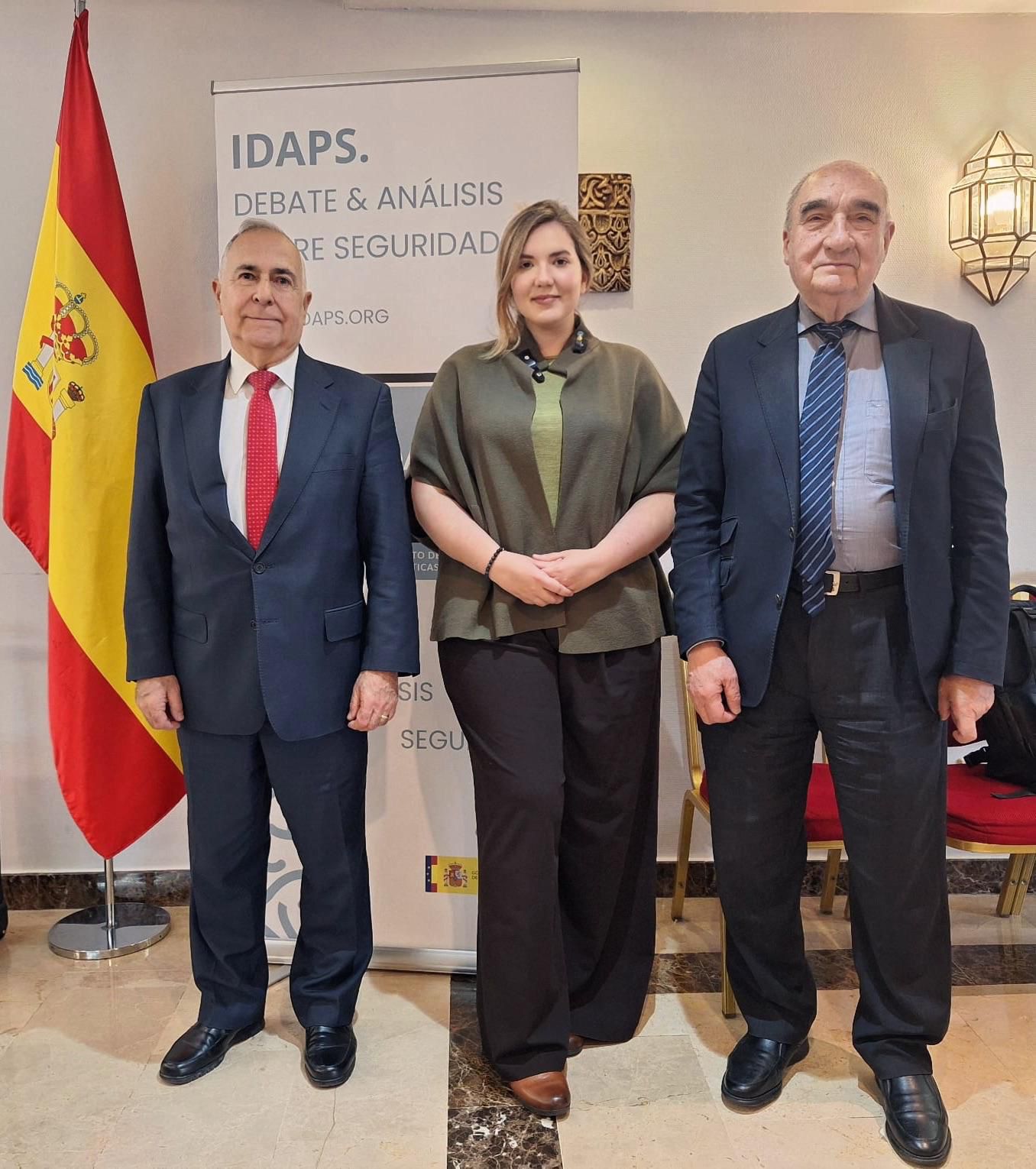
This week, under Chatham House rules, Future Literacy’s managing director María Luque engaged with a group of senior diplomats and foreign and defense policy officials to discuss a question that is increasingly moving to the center of international security debates: quantum advantage.

Special thanks to Colonel Manuel Morato, President of IDAPS, Servando De La Torre from the Spanish Academy of Diplomacy, and José Román Fernández Míguez from Tecnatom – Westinghouse Electric Corporation, for convening a demanding and thoughtful conversation at a moment when institutions are beginning to confront the strategic implications of quantum technologies more directly.

For years, quantum was largely framed as a technological promise; an exciting scientific frontier, but still somewhat distant from the immediate concerns of diplomacy and security.

That framing is changing.

What is shifting today is not only the maturity of the science, but the way institutions are beginning to interpret its consequences. Quantum technologies are increasingly understood as part of the infrastructure layer through which risk, sovereignty and strategic positioning will be assessed in the coming decades.

The question is therefore no longer simply when a quantum computer might break RSA.

The deeper question is what happens when the trust infrastructure underpinning international security begins to shift. Potentially abruptly.

Quantum technologies do not merely add new capabilities. They introduce asymmetries. They alter who sees first, who can protect communications, who can verify information, and who must adapt.

In doing so, they reshape the dynamics of informational superiority and resilience — both infrastructural and cognitive.

Consider sensing technologies capable of detecting assets that have historically remained hidden. Strategic systems such as nuclear submarines rely in part on invisibility to sustain deterrence and second-strike capability. If the physical principles that enable concealment begin to erode, the strategic equilibrium does not adjust slowly. It shifts.

The same is true for communications and cryptography. A large part of the international system rests on invisible architectures of trust: trust that communications are authentic, that intelligence has not been manipulated, that financial systems record value correctly, that diplomatic exchanges occur within a secure informational environment.

Quantum technologies place pressure on those foundations while simultaneously offering new ways to secure them, from quantum communications to verification architectures grounded in physical properties rather than computational assumptions.

All of this unfolds in a geopolitical environment marked by growing entropy.

Traditional allies are internally fragmented. Strategic narratives diverge. Shared interpretations of reality are less stable than they once were.

In such a context, technological advantage becomes sharper, and often more zero-sum, because it develops within architectures of trust that are themselves under strain.

For all the immense potential quantum technologies hold for the wellbeing of societies, their strategic impact in intelligence, security and foreign affairs will not be measured solely in terms of capability.

It will be measured in a more complex space: who can trust, who cannot, and which infrastructures make that trust possible.

Bridging the gap between the technical, political and strategic layers of these developments is becoming increasingly necessary. Conversations like this one reflect a growing recognition that quantum technologies must be understood not only as scientific advances, but as elements of the evolving architecture of international power.

The systems that will sustain trust in the coming cycle will not emerge automatically. They will require alignment, coordination and deliberate collaboration across sectors and borders.

With clarity, good judgement, and perhaps just a little faith.

The first in-person session confirmed a rising demand for structured intelligence that moves beyond speculation to reveal structure. Future Literacy will continue expanding the program through closed-door briefings and executive sessions across Europe and North America.

For institutional briefings, collaborations, or speaking engagements:
maria.luque@futureliteracy.eu
www.futureliteracy.eu/argo