
Capital · 5 November 2026
Beyond Conventional Bankability: How FLG’s Resilience Framework Evaluates Strategic Investments
Our investment evaluation framework addressing the blind spots of traditional ESG and bankability, validated institutionally by the Cotec Foundation and 42 industry and governmental organisations in Spain, through its first application targeted to defense investments.
Future Literacy Group
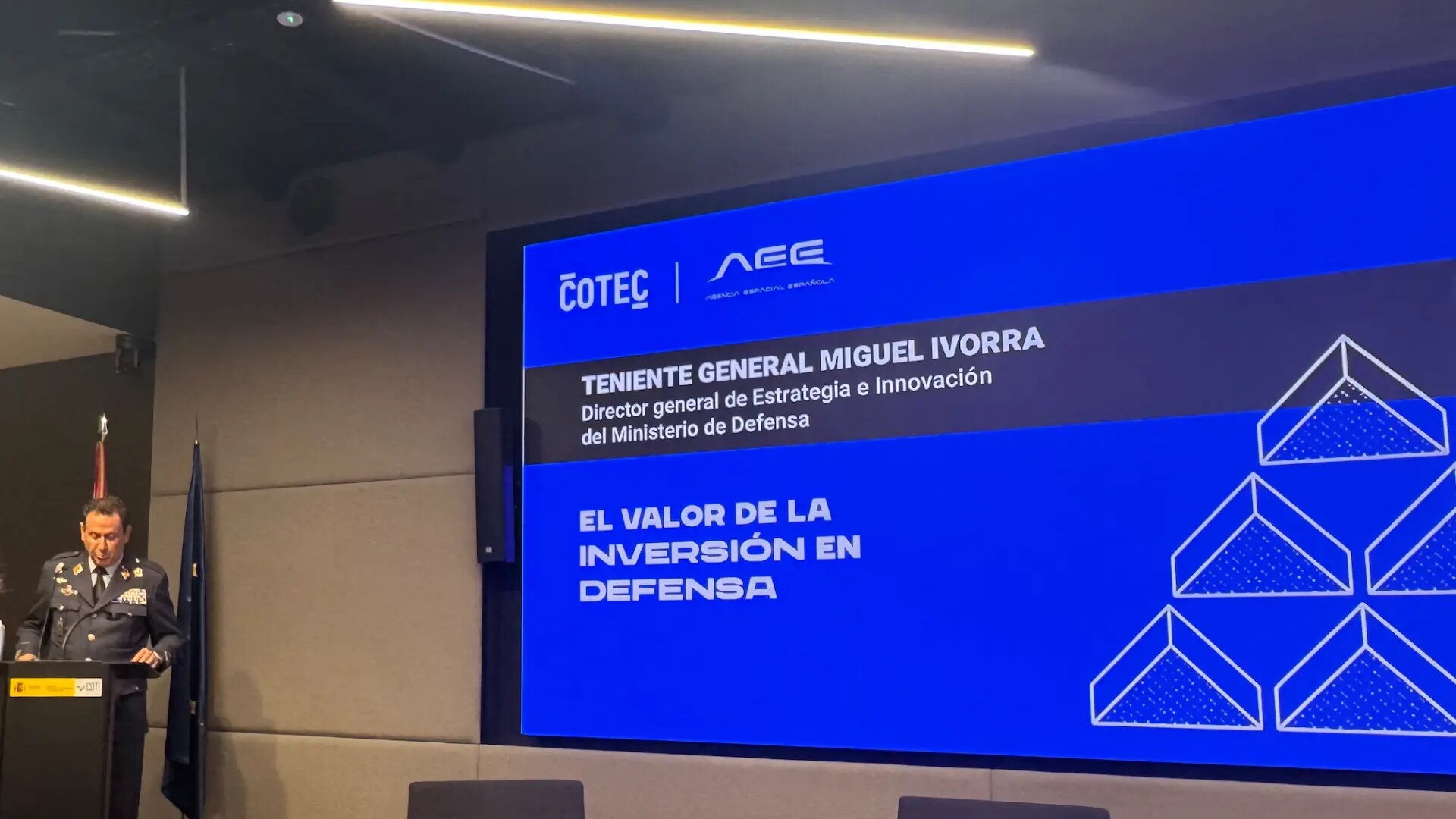
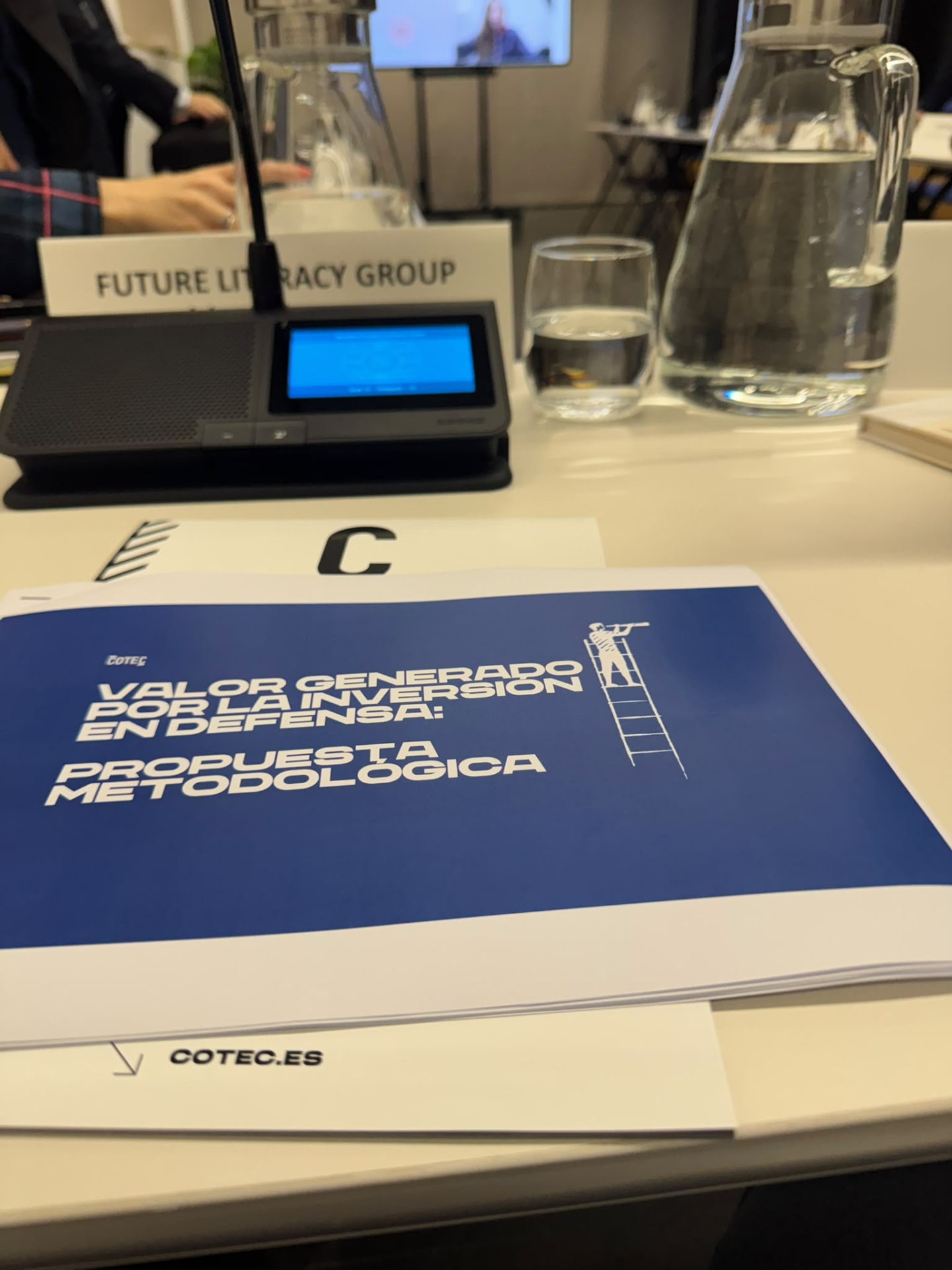
Future Literacy Group's work on strategic resilience has reached a significant institutional milestone with the publication and presentation of Fundación Cotec's Defence Investment Value Pyramid.
The work builds on the Resilience Pyramid developed by Future Literacy, subsequently adapted and further developed within Cotec's Working Group on Security, Defence and Technology for the assessment of high-stakes investments.
The initiative brought together 41 partner organisations alongside Cotec for refinement over the course of one year, and was presented on 4 November 2026 at CDTI, with the participation of senior representatives from the Spanish Government, the defence industry, technology companies, and research institutions.
The opening session featured Cristina Garmendia, President of Fundación Cotec; Jokin Aperribay, President of SAPA; M.ª Amparo Valcarce, Secretary of State for Defence; and Juan Cruz Cigudosa, Secretary of State for Science, Innovation and Universities.
The programme brought together leading industrial and research organisations including SAPA, Navantia, Indra, GMV, Telefónica, Grupo Oesía, Santa Bárbara Sistemas, AMPER, Tecnalia, CSIC, and CDTI. The closing session was led by Lieutenant General Miguel Ivorra, Director General for Strategy and Innovation at the Spanish Ministry of Defence.
The scale of this institutional participation reflects the critical need for advanced frameworks to navigate a reconfigured global landscape.
The Defense & technology Working Group built a consensus-based approach with the 41 organizations led by COTEC and supported by María Luque and FLG as contracted experts besides the initial methodology design
Moving Beyond Traditional Metrics
When institutional capital and governments evaluate complex investments, standard frameworks and traditional ESG criteria frequently fail to answer the critical questions that determine long-term success:
- /How do we measure the true territorial and systemic impact of an investment beyond short-term financial returns?
- /Does incoming capital create genuine structural autonomy, or does it deepen external dependencies?
- /How do we ensure that critical supply chains, energy corridors, and industrial capabilities are truly resilient against systemic shocks?
Conceived from its inception to address these blind spots, the resilience framework bridges the gap between material infrastructure and structural autonomy. Rather than looking solely at cost or isolated outputs, the architecture evaluates performance across two deeply integrated dimensions: the material foundation (securing energy, critical supply chains, and industrial depth) and the cognitive maturity (ensuring strategic judgment, institutional cohesion, and long-term sovereignty, envisioning political trade offs).
Empirically Validated: Executing and Iterating for Value
Its application within the Spanish defense and security ecosystem demonstrated that the framework provides three concrete operational breakthroughs:
- /Overcoming the Cost Trap: Transforming the budgetary conversation from isolated procurement into a multi-dimensional valuation of industrial, technological, knowledge-based, and geopolitical return.
- /Guiding Strategic Decision-Making: Moving from passive post-hoc impact reports to functional ex-ante decision-support tools for authorities, institutional investors, and prime contractors.
- /Establishing a Shared, Bankable Language: Enabling diverse actors—from sovereign funds to regional authorities and multinational corporations—to align strategic priorities within a unified analytical matrix.
While its recent adaptation within the Spanish ecosystem focused on defense and technology, the architecture itself was built for a broader mandate: evaluating long-term value and territorial impact across energy, critical infrastructure, and dual-use capabilities.
For Future Literacy, this milestone builds on work developed over several years at the intersection of frontier technologies, industrial capabilities, strategic autonomy, and international cooperation.
FLG deploys the Sovereign Resilience & Investment Framework as an operational advisory capability. Through its international platform, ASEAN Venture, Future Literacy extends this methodology into the assessment and development of industrial opportunities connecting European and Southeast Asian markets, addressing critical needs in energy, infrastructure, and regional resilience.
Future Literacy Group
Building better futures in the present.
For institutional and business enquiries: asean@futureliteracy.eu